
Stopping New Gas Pipelines in Washington
Williams has floated two major expansion projects that would involve hundreds of miles of new pipeline in Washington, and bring 700 million cubic feet of new gas to the state per day. Burning this gas would emit 13.5 million metric tons of CO2 per year and increase Washington’s annual emissions by about 14 percent. The gas quantity for these projects is four and a half times the amount of gas as the GTN Xpress expansion.
As energy demand from data centers skyrockets, Washington faces a choice: Maintain the progress required by our climate and energy laws, or cave to fossil fuel interests. New information shows a push for more gas infrastructure projects that threaten the climate, air quality, and our progress towards 100 percent clean energy.
Washington has some of the nation’s best climate and energy laws—and for good reason. Over 1.2 million people in Washington live in communities that are highly impacted by air pollution, and are exposed to the associated health risks.
With your support, Washington’s leaders have been climate champions. From opposing liquefied natural gas and methanol plants, to fighting the GTN Xpress gas pipeline expansion, our elected officials have stood up for communities and the environment against the fossil fuel industry. Now, facing a federal administration full of fossil fuel fanatics, Washington’s leaders must choose: stay on track or capitulate.
Fossil Fuels 🤝 Power-Hungry Data Centers
Electricity demand in the Pacific Northwest is projected to increase by 25 percent by 2029, with data centers accounting for almost half of the new demand. If electricity demand stayed where it is now, however, we could stop using fossil fuels and nuclear power to make electricity by 2030. As the region contemplates how to respond to new demands for energy, the fossil fuel industry sees a new opportunity.
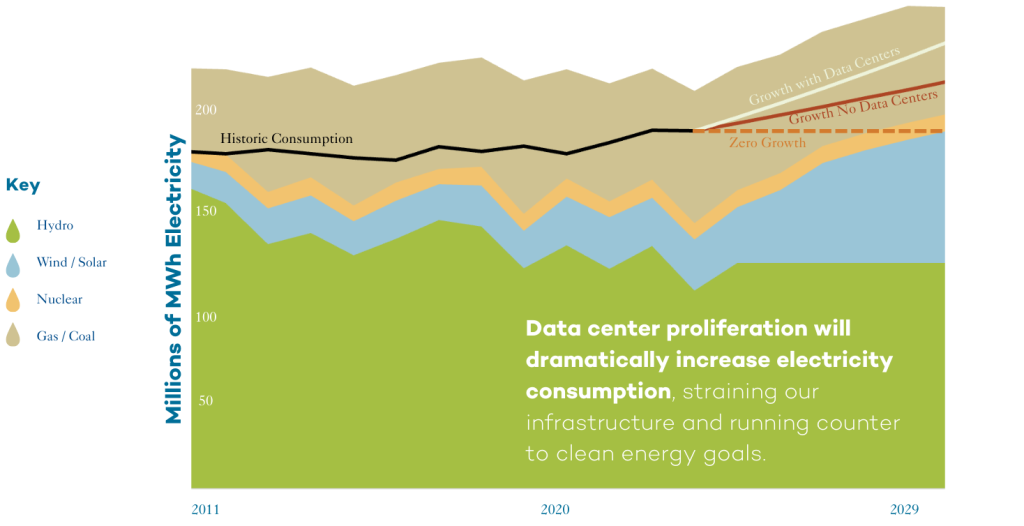
Gas corporations have dollar signs in their eyes. A region that was solidly moving away from reliance on gas is now a potential new market. Williams, the owner of the largest gas pipeline system in Washington, has its eye on power-hungry data centers and is actively exploring options to build new gas pipelines in the Northwest. By tracking investor calls and customer meetings, Columbia Riverkeeper learned that Williams is actively working to influence Washington policymakers’ opinions on methane gas. Williams boasts that Washington leaders’ opinions on gas are “softening.”
There was a time when the fossil fuel industry wouldn’t dare to propose a major new pipeline project in the Pacific Northwest. Now, they’re emboldened by the federal administration and the promise of data centers’ insatiable energy needs. We’re tracking two early-stage gas pipeline proposals from Williams, and a proposal for a new gas-fired power plant by a Washington utility.
In May 2026, we delivered a letter, co-signed by more than 20 other organizations and backed by over 1,000 Columbia Riverkeeper members and supporters, to Governor Bob Ferguson, Senator Patty Murray, and Senator Maria Cantwell outlining our opposition to new major fossil fuel expansion in Washington, with system-wide impacts in Oregon and Idaho.
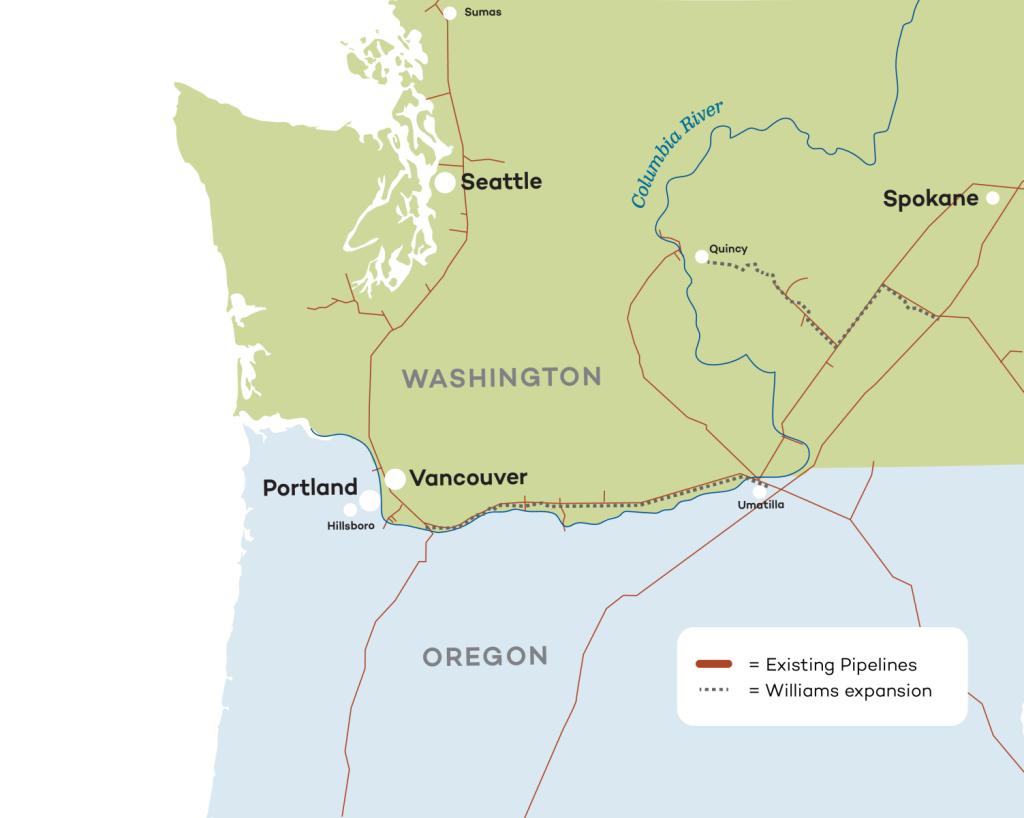
The Northwest Pipeline, owned by Williams, carries methane gas from Western Canada and the Rocky Mountains through Washington and Oregon.
Rockies Columbia Connector: New Pipeline Through the Columbia River Gorge
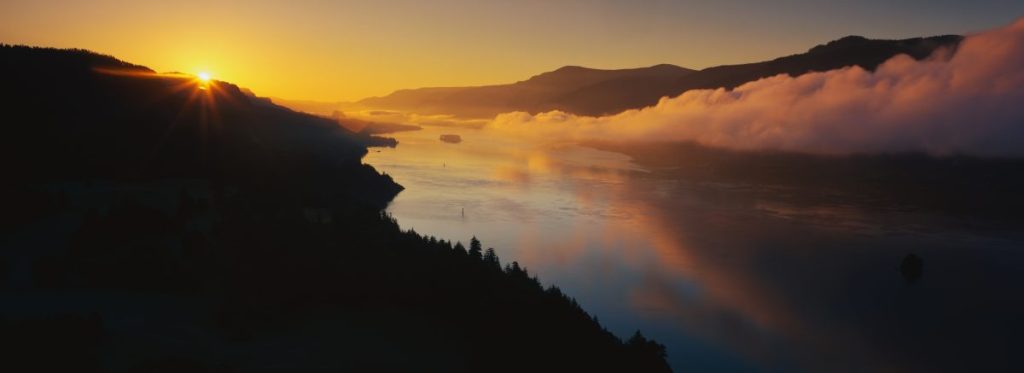
The “Rockies Columbia Connector” would bring a staggering quantity of new gas from the Rocky Mountains to Washington. Williams wants to add 158 miles of new pipeline along the Columbia River Gorge and expand air-polluting compressor stations.
(The following image and claims were created by Williams; Columbia Riverkeeper disagrees with William’s characterization of the impacts and benefits of this project.)
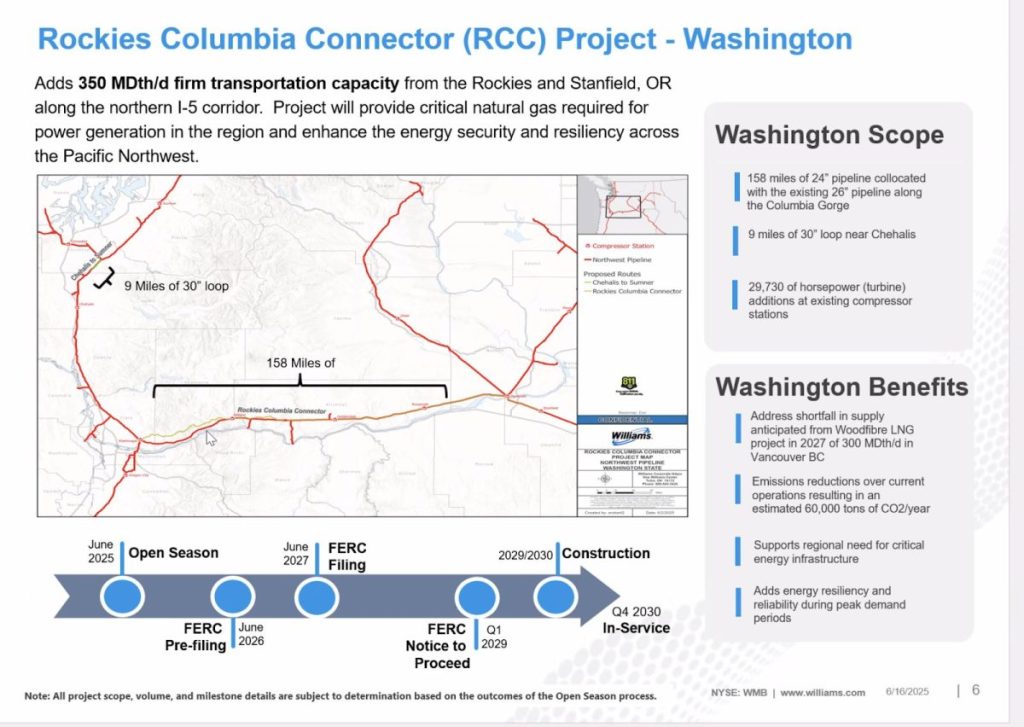
Williams held “Open Season” on the Rockies Columbia Connector project last year, to solicit interest from gas utilities and other entities. The stated capacity of this project in Washington is 123.3 billion cubic feet of gas per year.
This project should be a non-starter. Laying new pipeline along the Columbia River Gorge would harm water quality and impact highly sensitive areas. The air quality implications for this project are enormous, especially considering communities along the I-5 corridor already experience significant concentrations of pollution.
Grant County: New Pipeline + Gas-Fired Power Plant
The second of Williams’ proposals is called the “Valley Trail Project”: 137 miles of new pipeline in Grant County supplying 123.3 billion cubic feet of new gas per year.
(The following image and claims were created by Williams; Columbia Riverkeeper disagrees with William’s characterization of the impacts and benefits of this project.)
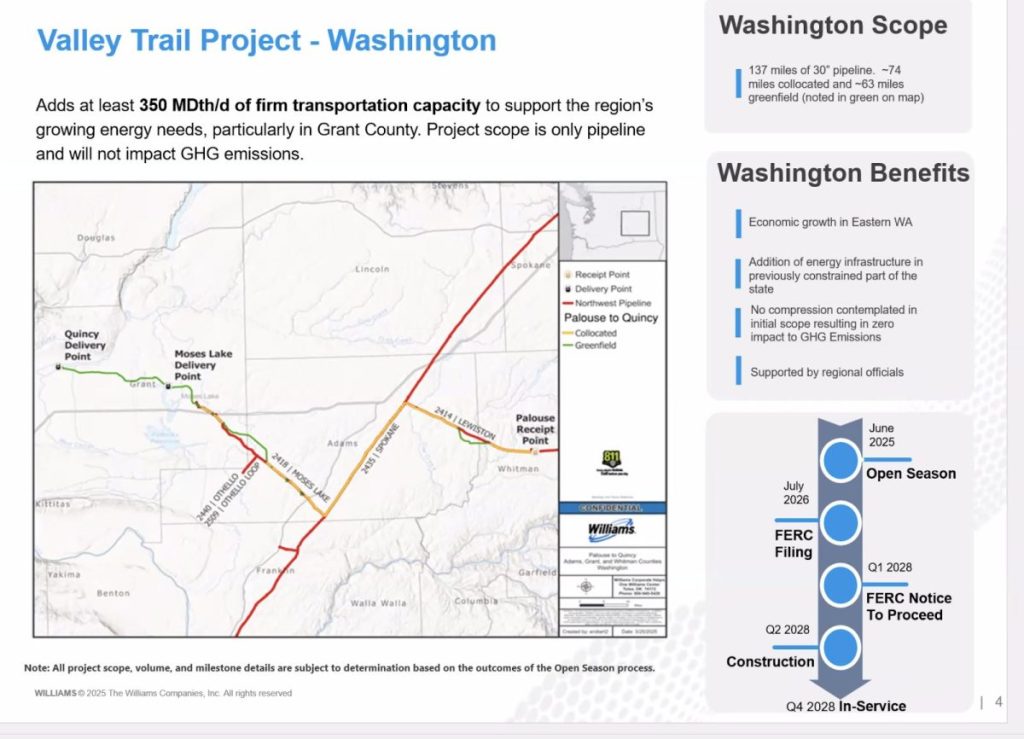
Data centers have flocked to this area, leading to concerns about water and energy consumption. In August 2025, the Grant County Public Utility District claimed that 79 pending requests for utility service would consume roughly two Seattles’ worth of energy.
This January, Grant County Public Utility District announced plans to explore the feasibility of constructing new gas-fired power plants near Moses Lake or Quincy. The materials reference a need for gas pipeline expansion in order to achieve supply.
It is unacceptable for data centers to derail our region’s climate progress. New gas pipelines have no place in the Northwest. The short term profits of greedy corporations are not worth sacrificing clean water, clean air, and healthy communities.
Our Washington elected officials did the right thing when it came to opposing the GTN Xpress gas expansion. Now, it’s time for them to stand firmly against Williams’ pipe dreams.
It’s not too late for Washington leaders to stop these dirty projects in their tracks. River communities, public health advocates, and environmental champions have been clear: new gas is not welcome in the Pacific Northwest.
Resources:
Tell Governor Ferguson: No New Gas Pipelines