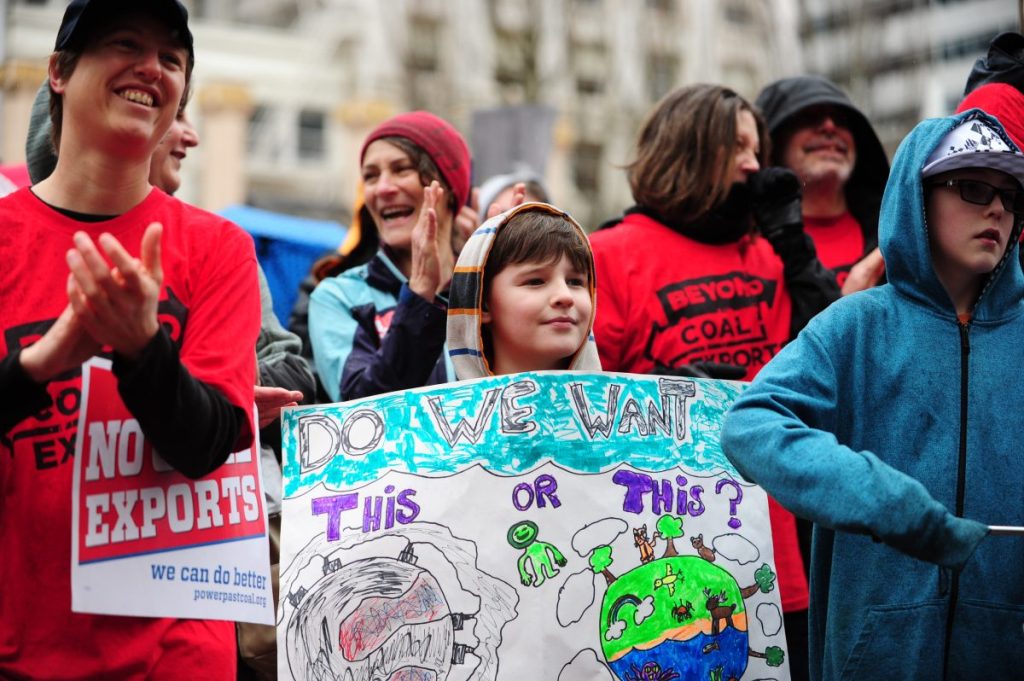
Photo Credit: Alex Milan Tracy
By: Kate Murphy, Senior Community Organizer
Rumors have been swirling about coal exports in Longview.
Disclosure: This article was written in 2026 and is not satire.
Rumors of Longview Coal 2.0
Rumors are swirling about the coal industry eyeing Longview, Washington as the site of a new coal export terminal. It is hard to believe, but we don’t take serious threats to the Columbia River lightly. Columbia Riverkeeper and our partners are tracking this issue closely and intend to ensure that the coal industry’s plan to target Longview (again) never becomes a reality.
Background
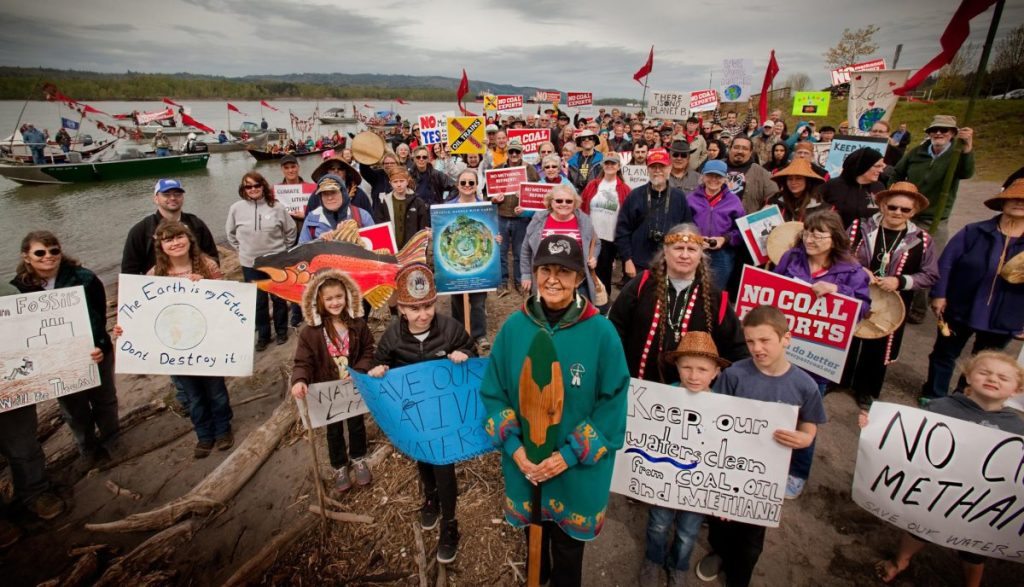
Roughly fifteen years ago, the coal industry set its hopes on making the Pacific Northwest a major hub for coal exports. Six major coal export terminals were proposed, none were ever built. Columbia Riverkeeper is proud to have been a partner in the highly effective Power Past Coal coalition, which organized local communities, offered educational information, shared opportunities for community engagement, and created a powerful resistance to bringing the harms of coal to this region—an area affectionately coined “The Thin Green Line” for its tenacity in stopping fossil fuel proposals.
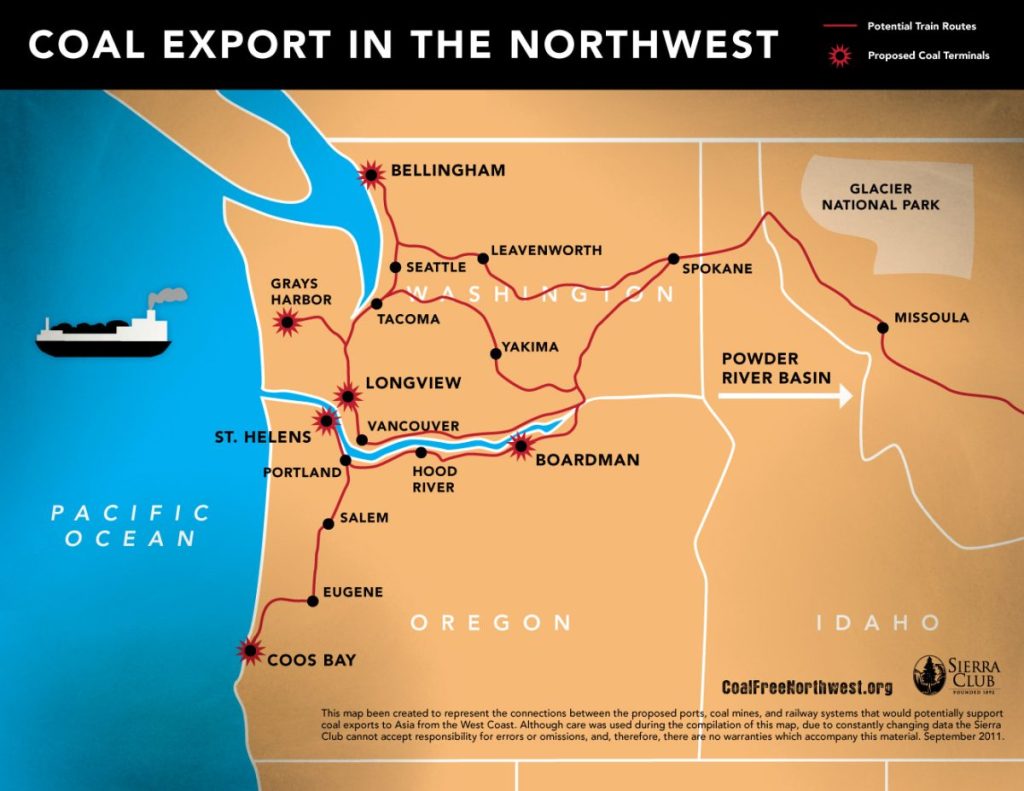
One of these proposals was the Millennium Bulk Coal Export Terminal in Longview, Washington. First proposed in 2010, Millennium Bulk would have exported at least 44 million metric tons of coal annually. Roughly sixteen 1.3 mile-long coal trains would have traveled through river communities every day. The coal piles at the site near the Columbia River would have loomed eight stories high and 50 football fields wide, before being loaded onto marine vessels to be exported to Asia. *
In 2017, following massive regional opposition to the project, the Washington Department of Ecology denied a key permit, the first in a series of losses for Millennium. In 2020, following multiple failed legal challenges, Millennium’s parent company filed for bankruptcy.
Thanks to the incredible work of a powerful, skilled regional coalition, as well as Tribes and regional leaders, we avoided the major environmental harms and threats to public health and safety that these coal export proposals would have caused.
A Changing Market
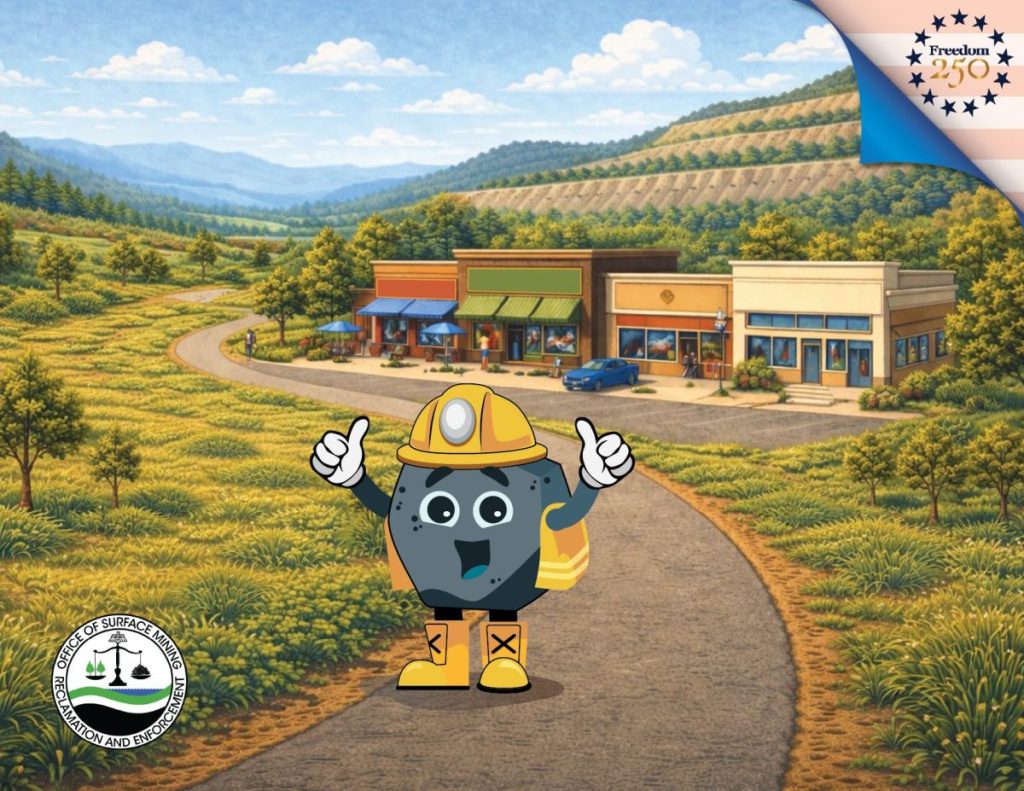
Since 2010, demand for coal has dropped dramatically in favor of less harmful, cheaper, more effective forms of energy. Unfortunately, the current administration seems highly motivated to bring back coal. The US Department of the Interior created “Coalie” — a googly-eyed, cute, yet slightly frightened looking mascot sentenced to cheer on Trump’s backward effort to force a last breath into a dying coal industry. Despite the animated resuscitation attempt, the well-established harms to the environment and threats to public health and safety caused by coal still remain.
What’s Happening Now?
The Seven County Infrastructure Coalition (SCIC), a public entity in Utah, received funding to study potential West Coast coal export terminals. The primary locations identified for the feasibility study are the Port of Oakland and the Port of Longview in Washington. A third location is being considered in Mexico, and SCIC has expressed openness to hearing about other West Coast locations as well.
In a January meeting of SCIC, Michael Klein—who was previously associated with the 2010 Millennium Bulk proposal to bring coal exports to Longview—gave an enthusiastic presentation specifically on the desirability of Longview as a location for coal exports. The presentation focused on the same site that was previously the target of the 2010 failed Millennium Bulk project.
In February, SCIC awarded a company called Norda Stello with a contract of $488k to execute the feasibility study.
What’s next?
When it comes to fighting coal exports in this region, our coalition is ready to hit the ground running. We have the benefit of years of experience and knowledge in our community, the legal know-how to challenge harmful proposals, and thousands of people ready to protect what they love, again. Collectively, this makes us uniquely prepared to take on this challenge.
The Pacific Northwest is more ready than ever to fight off archaic coal export proposals. We are hopeful that this bad idea will go no further, but we will be tracking this as it progresses and we will be ready if it gains momentum. Stay tuned for more information.