
Judge’s Order Balances Fish and Affordable Power
Thanks to a court order, baby salmon are travelling downstream faster and more safely in 2026.
By: Miles Johnson, Legal Director
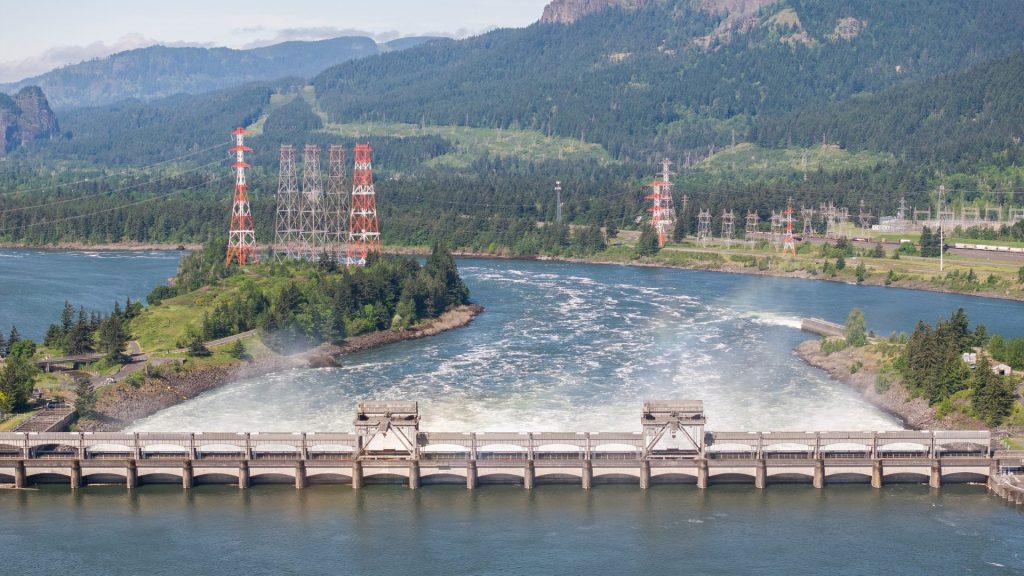
Back in February—in response to a request by Columbia Riverkeeper and many others, including several Tribes and Oregon and Washington—a court ordered additional protections for Columbia River salmon. Specifically, the court ordered more frequent “spill” at dams on the Columbia and Lower Snake rivers throughout the year and blocked a proposal from federal agencies to operate the reservoirs at higher pool elevations, which would slow fish migration.
“Spilling” water over the top of the dams helps fish migrate downstream, but it means that less water goes through the dams’ turbines to generate electricity. So the public hydropower industry—including Bonneville Power Administration and lobbying groups like Northwest River Partners and Oregonians for Affordable Hydropower—have loudly criticized the court’s order. Salmon recovery and power generation are somewhat in tension. However, many public power companies and their lobbying groups have begun misleading the public about the effects of this year’s court order. Let’s take a look at some of their claims and set the record straight.
Public power companies say they want dialogue, but really want delay.
Public power is disingenuously attacking Governor Kotek and other Northwest leaders for going to court to restore minimal protections for salmon in 2026. Public power groups claim they want dialogue and collaboration, but their actions show otherwise. Many of these groups lobbied the Trump Administration to abandon the Resilient Columbia Basin Agreement (RCBA), which was a comprehensive conversation about next steps for salmon and energy. Maybe the RCBA process scared public power—after all, it could have led to real changes like removing Lower Snake River dams or preventing Bonneville Power from abusing its authority over salmon recovery funding to coerce or punish regional fisheries management agencies. But the RCBA was a forum for conversation and collective problem solving. Rather than engage in that forum, public power pushed to terminate it knowing full well that the alternative was litigation—and now they are trying to shift the blame on to Governor Kotek, Governor Ferguson, and Tribes whose Treaty-promised salmon have mostly disappeared.
A personal observation from someone who has heard a lot of ‘dialog’ by public power lobbyists over the past decade: Public power brings almost nothing to the table in terms of meaningful solutions for salmon recovery. They are mostly too busy pretending that salmon are just fine, or that the dozens of large dams in the Columbia River Basin don’t hurt fish. They don’t really want to collaborate and discuss solutions, but (if forced to choose) they’d much rather talk about solutions than implement them.
Public power brings almost nothing to the table in terms of meaningful solutions for salmon recovery. They are mostly too busy pretending that salmon are just fine, or that the dozens of large dams in the Columbia River Basin don’t hurt fish.
The court order is not raising your electrical bills.
Hydropower lobbyists and industry groups have claimed, without offering any evidence, that the court-ordered spill is driving up your monthly energy bills. But the court carefully considered and rejected this argument, noting that most of the fish protection measures required in 2026 have been done before “without such negative repercussions. . . .” The Bonneville Power Administration initially threatened to raise wholesale power rates in response to the court order, but more recently slow-walked this idea. And no hydropower industry group has come forward with any data showing how the additional spill for salmon ordered by the court in 2026 is actually affecting our monthly energy bills. These recent salmon protection measures are not meaningfully increasing energy costs in the Northwest.
The lights are not going out.
Hydropower interests are also using scare tactics to suggest that court-ordered protections for salmon could lead to dangerous blackouts or power outages. This is baseless fear-mongering. Both the law and the court’s order allow federal agencies to prioritize power generation over salmon in an emergency—and no emergency loss of power has happened in 2026.
Spill is good for salmon.
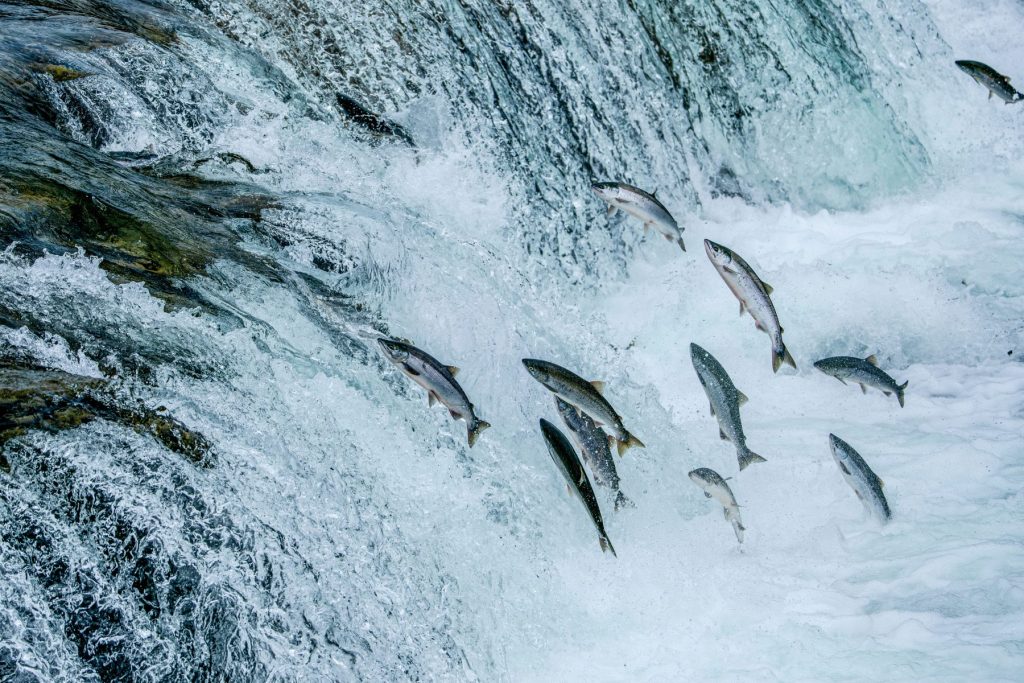
Bizarrely, public power is even claiming that the court-ordered salmon protections are hurting fish. Their argument goes something like this: increasing spill to help juvenile salmon move downstream can make it hard for adult salmon migrating upstream to find and use fish ladders. Like most good lies, it contains a little bit of truth: This can happen in extreme cases. However, most of the expert fish management agencies in the Columbia Basin agree that this hasn’t been a significant problem in 2026—but the Army Corps still decreased spill from court-ordered levels this year, nominally to protect adult salmon. The narrative that court-ordered spill is bad for salmon is a disingenuous attempt to gin up a problem where none exists.
The status quo is not working for fish, or energy.
The court noted that federal salmon policy is moving in the “wrong direction” and scolded Bonneville Power and the Army Corps for their “disappointing history of government avoidance and manipulation instead of sincere efforts at solving the problem and genuinely remediating the harm.” To temporarily address these problems, the court ordered certain minimal protections for salmon while carefully balancing the region’s need for hydropower generation.
The energy system in the Pacific Northwest is facing challenges. Some of these challenges are unanticipated and uncertain, like the rise of power-hungry data centers serving AI. Many of these challenges—like inadequate transmission lines, being slow to integrate wind and solar, and making poor choices about regional power markets—are self-inflicted by the Bonneville Power Administration. None of these challenges are caused by salmon, but the public power lobby is happy to blame and sacrifice salmon, and the communities and cultures that rely on them.
Take Action for Salmon Recovery