
Data centers use water to cool their computer servers, which produce an enormous amount of heat. This process uses a lot of water and introduces new heat and toxic pollution into wastewater, exacerbating existing water quantity and pollution challenges.
Data center developers have flocked to counties along the Columbia River, resulting in some of the fastest growth in the nation.
The following is an overview of the major ways that data centers’ direct water use impacts the Columbia River, and why strong protections are necessary.
Every year, a 100 MW “hyperscale” data center will use 100 million gallons of water, the equivalent of the annual domestic use of 2,500 people.
Data centers use extraordinary amounts of water, most of which is lost through evaporation.
- As of mid-2026, Big Tech is proposing up to 5 GW of new data centers in just 10 counties along the Columbia River, using over 5 billion gallons of water per year.
- Google’s data center complex in The Dalles, Oregon, consumed 302 million gallons in 2023 and 550 million gallons in 2025, ranking among the most water-intensive centers in the nation.
- When previously contaminated water is used for data centers, a large majority of the water evaporates, but pollutants like nitrates and heavy metals remain, increasing the concentration and creating a byproduct that is even more toxic.
- Data centers that use water based cooling systems can be more energy efficient, while those that use air based cooling use less water but more energy. There is no best practice that conserves both water and energy.
Oregon and Washington are currently in the worst megadrought on record.
- Washington Department of Ecology’s draft forecast for the next 20 years highlights critical challenges to water supply in the Columbia River Basin as warmer winters and shrinking snowpacks, along with declining groundwater levels, will result in even less water being available.
- According to a national Bloomberg News analysis, “two-thirds of new data centers built or in development since 2022 are in places already gripped by high levels of water stress.”
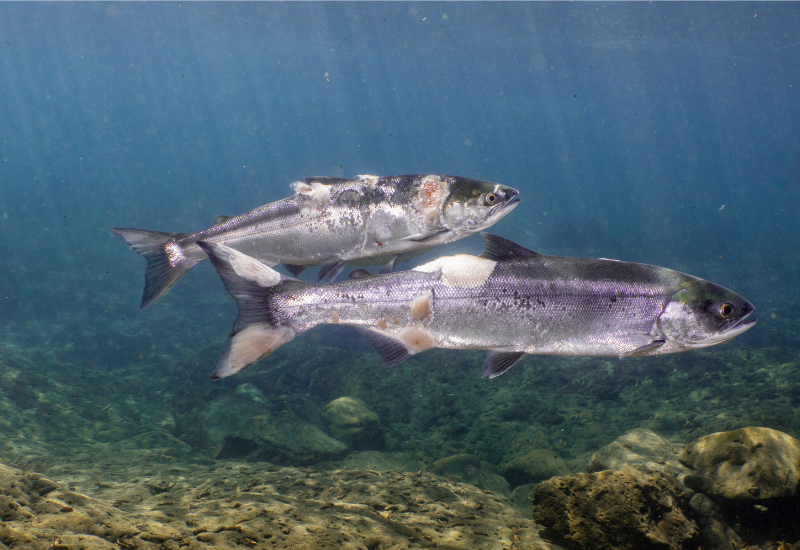
Data centers’ reliance on hydropower increases the risk and severity of salmon kills.
- Data centers place additional nonessential stress on the hydropower system during critical periods. During major power shortages, the Bonneville Power Administration implements emergency protocols, including reducing or eliminating fish protections at federal dams.
- In a 2001 power shortage that triggered emergency protocols, millions of Tribal treaty-protected juvenile salmon and steelhead were killed.
- Additional data center electricity demand threatens to prolong operation of the Lower Snake River dams and exacerbate hydropower’s impacts on salmon and other Tribal fishery resources.
Data centers pollute water by adding heat and toxic chemicals, exacerbating existing water quality challenges.
- Data centers use chemical slurries to manage temperature, prevent corrosion, and kill microorganisms. However, without reporting requirements, data centers are highly secretive about what chemicals they add to water.
- Some data centers are promoting “closed loop” systems for cooling that use PFAS and other chemicals for cooling and may use less water directly. More information is needed to understand the trade-offs of these systems, how often and where they are discharging, how accidents and spills would be addressed, and specifically what chemicals would be used.
- In other parts of the country, communities near data centers have found their water contains excess sediment, nitrates, and per- and polyfluoroalkyl substances (PFAS).
After Amazon data centers were built in Morrow County, Oregon, 689 of the wells tested for nitrate pollution by Oregon Health Authority determined to be unsafe to drink or cook with. In March of 2026 Amazon settled a lawsuit with impacted residents for $20.5 million.
- Thermal Pollution: The Environmental Protection Agency regulates heat as a pollutant under the Clean Water Act.
- Heat pollution is already a major concern for the Columbia River: significant portions of the river have been identified as “impaired” by high temperatures.
- Data Centers exacerbate this problem by creating warm wastewater.
- Small increases in river temperature can reduce dissolved oxygen levels—which is vital for fish survival—and generate harmful algal blooms causing stress for salmon, steelhead, and other cold-water fish.
- According to an international study on the heat dissipation of data center hyperscalers, data centers raise surrounding temperatures by around 2°C, creating a heat island effect. This can affect temperatures of nearby waterbodies and triggers a feedback loop, requiring even more energy and water to cool the systems.
Environmental Justice: While Big Tech profits, data centers strain local resources of underserved communities.
- Data centers’ strain on communities is unevenly distributed and disproportionately affects rural communities. In Eastern Oregon, Morrow County has 10 current data center campuses and more in development.
- Roughly 30 percent of the county lives in mobile homes and 40 percent live below the poverty line, and the vast majority of residents rely on shallow well water with heavy nitrate contamination from neighboring industrial agriculture.
- Ratepayers’ water bills spike as data centers require expanded water infrastructure. The Dalles, Oregon, plans to increase water rates by over 85 percent in the next 10 years alone, taking the typical residential bill month from $57.65 to $123.34 per month.
- S&P predicts that demand for new construction is expected to double by 2030, most of which in rural counties like Morrow County that are otherwise reliant on agriculture.
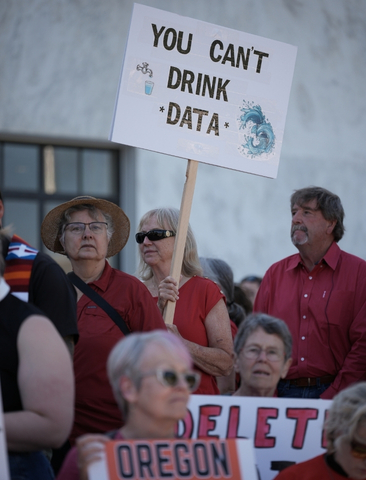
Data center development has gone largely unchecked—we need to address data centers’ water use and pollutants as part of a holistic suite of protective regulations.
- Transparency: Data center operators often conceal their water usage, making it extremely difficult for the public to know the amounts of water consumed by individual facilities. Only half of data center owners and operators even internally track water use, due to the lack of regulatory obligations. Case in point: In 2023, The Dalles sued The Oregonian to prevent it from obtaining basic information on water usage by Google’s data centers, claiming that water use is a “trade secret.”
- Exploiting Municipal Water Systems: Data centers produce wastewater at levels most existing public wastewater treatment plants are not prepared for and introduce atypical pollutants that these systems are not designed to treat. In addition, some data centers strain municipal water systems. In The Dalles, Oregon, the city is seeking to increase water supply by acquiring land within the Mount Hood National Forest to tap into a watershed that provides cold water to the Hood River, a tributary to the Columbia River, and support salmonids.
- Indirect Water Use: Data centers also use huge amounts of water indirectly such as from fossil fuel or nuclear power plants, as well as chip production. This can be a larger use of water than what is directly used for cooling a data center.
Columbia Riverkeeper’s Resources on Data Centers:
- September 2025 Data Center Background Brief
- February 2026 Closer Look Report
- June 2026 Data Centers & Gas Report
- Columbia Riverkeeper Stand Up to Data Centers Webpage
Ready to take action?
Tell your elected officials you want a three year statewide moratorium on new data centers!

Columbia River Inter-Tribal Fish Commission’s Energy and Water Impacts and Recommendations for the Oregon Data Center AdvisoryCommittee
The Water Foundation’s Water & Data Centers Report
Columbia River Inter-Tribal Fish Commission’s Presentation to the Oregon Data Center Advisory Committee
Honor the Earth: No Data Centers on Native Land! Organizer Toolkit
To view full citations, please download the full report.
2026 Oregon lobby day + moratorium rally photos by Alex Milan Tracy. Data centers logo by Melissa Delzio. Sockeye photo by Conrad Gowell.